FAQ
Frequently Asked Questions
Clear operational answers for importers evaluating Vancouver transloading, bonded, and sufferance options.
What is a bonded warehouse in Canada?
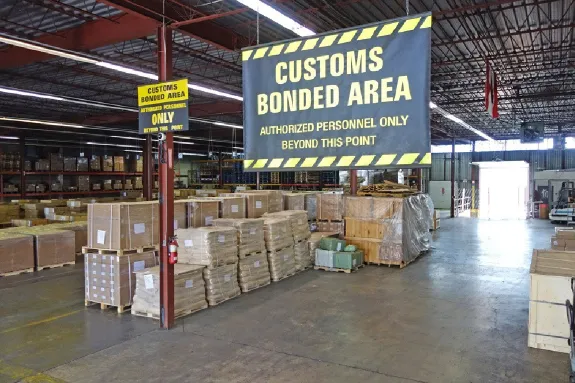
A bonded warehouse in Canada is a CBSA-licensed and regulated facility where imported goods are stored under customs control before release. Duties and taxes are generally deferred while goods remain in-bond, then become payable when goods are released for domestic consumption (subject to applicable program rules).
What services can you provide at your bonded warehouse in Surrey, BC?
We can provide allowable bonded activities such as storage, inspection, display/marking support, labeling/tagging, packing/repacking, testing, cleaning, preserving, sorting/grading, and related non-material handling steps. Final service scope is based on goods type, permit status, and CBSA requirements.
What can and can’t be done in a bonded warehouse?
You can perform specific handling activities that do not materially change goods (for example labeling, repacking, testing, sorting). You cannot further manufacture goods in a bonded warehouse. Restricted/controlled goods without required permits or authorizations cannot be entered, and certain product categories (such as alcohol/tobacco) have additional controls.
How long can goods stay in a bonded warehouse?
Generally, goods may be stored for up to four years, with category-specific limits under CBSA rules.
Do permit and authorization requirements still apply in bonded warehousing?
Yes. Goods entered into a bonded warehouse are still imported goods and must meet applicable permit/authorization requirements from CBSA and other government departments.
Can duties and taxes be deferred in a bonded warehouse workflow?
Generally yes. Deferral applies while goods remain in-bond, then duties/taxes are addressed at release for domestic consumption or under applicable export/deemed-export pathways.
Can we export from your bonded warehouse to the U.S. without paying Canadian duties?
We support in-bond export workflows, including U.S.-bound movements. Whether Canadian duties/taxes apply depends on shipment details and customs filing treatment, so lane-specific requirements should be confirmed with your broker before dispatch.
How does your Surrey location help with exports to the U.S.?
Our Surrey bonded workflow is approximately 15 minutes from the U.S. border, which can support faster and more cost-efficient export routing for qualifying shipments. For in-bond goods exported directly, Canadian duties/taxes are generally not paid as domestic-release charges in Canada, subject to CBSA program rules and proper export compliance.
Can I store steel in your bonded warehouse while waiting for quota to refresh?
Yes. Steel and other TRQ-covered products can be held in-bond at our Surrey facility during quota exhaustion periods. Goods remain under CBSA-compliant custody and are released for domestic consumption once your quota window opens — avoiding surtax exposure during storage.
How does bonded warehousing work with Canada's steel safeguard TRQ program?
Canada's steel safeguard measures apply a 50% surtax on covered products imported above the Tariff Rate Quota threshold. By placing arriving steel into bonded storage rather than releasing it immediately, importers can wait for the next TRQ allocation period to begin before triggering domestic entry — deferring surtax until quota is available.
Can your facility handle steel coils and other heavy industrial cargo?
Yes. Transpac's Surrey facility is equipped for heavy industrial cargo including steel coils. Contact us with your coil count, total weight, and container count so we can confirm capacity and plan your intake workflow.
What happens if goods stay in a bonded warehouse past the four-year limit?
Before the limit is reached the goods have to leave bonded status — either entered for domestic consumption with duties and taxes paid, or exported. Goods left in bonded status beyond the prescribed period can be treated by CBSA as forfeit. Transpac tracks in-bond ageing per lot and flags approaching deadlines so the release or export decision is made in advance rather than at the deadline.
Can a first-time importer with a single container use a bonded warehouse?
Yes. There is no minimum volume for bonded storage — a single container can be entered in-bond the same way a multi-container program is. The duty-deferral benefit scales with the duty value at stake, so it matters most on high-duty goods or when the release date is uncertain. Permit and documentation requirements are the same regardless of shipment size.
What is Transpac's CBSA bonded warehouse sublocation code?
Transpac's bonded warehouse sublocation code is 6335, under CBSA port code 0841, at Unit 101-104, 3225 194 Street, Surrey, BC. The same facility also holds a sufferance warehouse licence under a separate code, 6336 — use 6335 for goods entering in-bond duty-deferral storage and 6336 for cargo arriving before customs release. Your broker references the applicable code on the cargo control document so the shipment is routed to and traced at the correct licensed facility.
My steel shipment is arriving after the TRQ quota filled — what are my options?
There are three. Pay the 50% safeguard surtax and release the goods now; re-export them; or place them in a bonded warehouse and wait for the next allocation period. Bonded storage is the only option that keeps the goods in Canada without triggering the surtax, because the surtax attaches at domestic release, not at arrival. Transpac receives the steel in-bond at its Surrey facility, holds it under CBSA custody, and releases it once your quota window opens. Which option is cheapest depends on the duty value at stake against the storage period, so send the coil count, total weight, and container count and we can lay the numbers side by side.
How long can steel sit in a bonded warehouse waiting for the next quota period?
Bonded storage allows up to four years for most product categories, which is far longer than any TRQ allocation gap — the constraint on a quota bridge is practical cost, not the regulatory limit. In practice steel held for a quota bridge sits for weeks, until the next allocation period opens and the goods can be entered for domestic consumption at the in-quota rate.
If I re-export the steel instead of releasing it in Canada, do I still pay the surtax?
Goods exported directly from bonded status without being released for domestic consumption generally do not attract Canadian domestic duty and tax assessment, the safeguard surtax included, because that assessment happens at domestic release. Transpac's Surrey facility is roughly 15 minutes from the U.S. border, so a U.S.-bound re-export is a short move. Export eligibility and filing treatment are shipment-specific, so confirm the lane with your customs broker before dispatch.
What do you need from me to take in a steel shipment at risk of the safeguard surtax?
Coil count or piece count, total weight, container count, the product category, and your expected quota window. Weight and dimensions determine handling and placement, since steel coils need equipment the facility is already set up for. The quota window determines the release plan. Documentation follows the normal bonded intake path — the goods are still imported goods, so permit and authorization requirements apply the same way they would for any in-bond entry.